Top 5 MCAT Prep Mistakes Every Puerto Rican
The journey to medical school is a challenging one, and for Puerto Rican students, the Medical College Admission Test (MCAT) represents a significant hurdle. It’s not just another exam; it’s a grueling, 7.5-hour assessment that tests your knowledge, critical thinking, and endurance. While students everywhere face difficulties, pre-med scholars in Puerto Rico often encounter a unique set of challenges that can impact their preparation. From cultural differences in education to the nuances of tackling a high-stakes exam primarily in English, the path requires a tailored strategy.
Many bright, capable students see their scores suffer not from a lack of intelligence or effort, but from common, preventable missteps in their study plan. Recognizing these pitfalls is the first step toward avoiding them. This article will guide you through the top 5 MCAT prep mistakes every Puerto Rican student should be aware of and provide actionable strategies to overcome them, turning your preparation into a story of success.
Underestimating the CARS Section
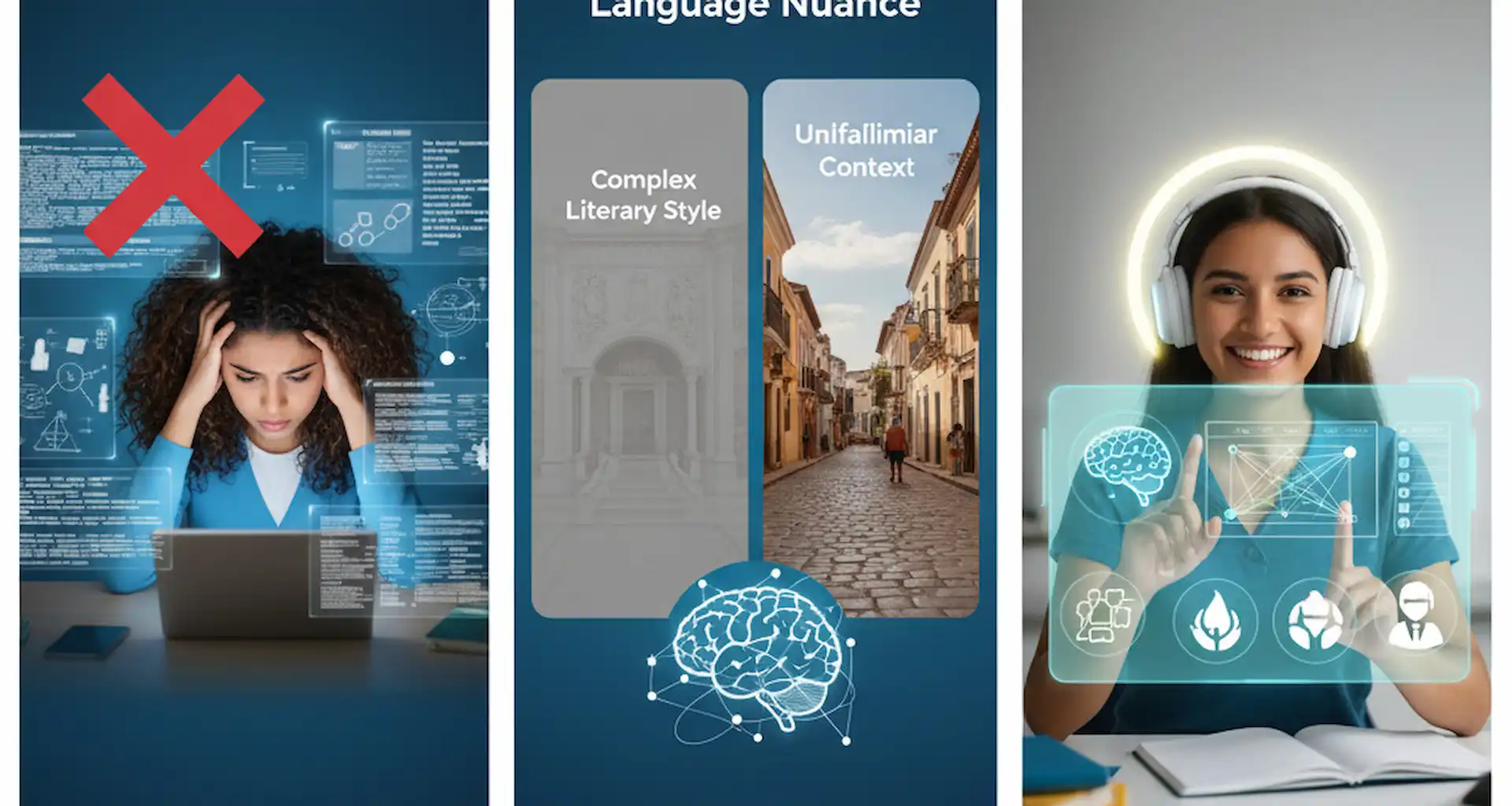
For many students whose first language is Spanish, the Critical Analysis and Reasoning Skills (CARS) section can feel like the most daunting part of the MCAT. Unlike the science sections, which rely on memorized facts and formulas, CARS tests your ability to comprehend, analyze, and evaluate complex passages drawn from a wide array of disciplines in the humanities and social sciences.
The mistake here is assuming that being bilingual or proficient in English is enough. The CARS section requires a specific type of critical reading that goes beyond simple translation or understanding vocabulary. It demands that you grasp the author’s tone, identify the main idea, understand the structure of the argument, and infer meaning from context—all under intense time pressure.
Why this is particularly relevant for Puerto Rican students: While you are taught English from a young age, the academic and literary style of CARS passages can be unfamiliar. The cultural context of the texts, often rooted in a mainland U.S. or European perspective, might feel distant, making it harder to engage with the material intuitively.
Relying Too Heavily on Passive Learning
Passive learning involves activities where you consume information without actively engaging with it. This includes re-reading textbooks, highlighting large portions of text, and passively watching video lectures. It creates an illusion of mastery—the material feels familiar, so you assume you know it.
The MCAT, however, is designed to test the application of knowledge, not just recognition. You might recognize a term you highlighted, but can you explain it in your own words? Can you apply the underlying concept to a novel, experimental scenario you’ve never seen before? Passive learning says “no.”
This approach is a critical mistake because it wastes precious study time. It’s comfortable and feels productive, but it doesn’t build the strong neural pathways needed for recall under exam stress. Active learning, which we’ll discuss later, is far more effective.
Neglecting Practice Tests and Timed Conditions
Knowing the content is only half the battle. The MCAT is a marathon of mental endurance. Without simulating the actual testing environment, you are setting yourself up for a painful surprise on test day.
The key mistakes here are:
- Avoiding Full-Length Exams: Only doing single sections or untimed questions doesn’t build the stamina needed for 7.5 hours of focused testing.
- Ignoring the Clock: Practice questions done leisurely don’t reflect the intense time pressure of the real MCAT. You must get comfortable with the pace.
- Not Practicing Focus: The ability to maintain concentration through four sections, with breaks in between, is a skill that must be practiced. Cramming for hours on a Saturday is not the same.
Skipping this step is like a runner training for a marathon by only ever sprinting 100 meters. They might be fast, but they won’t have the endurance to finish the race strong.
Ignoring the Importance of Review and Analysis
This is perhaps the most subtle yet devastating mistake. Many students do plenty of practice questions and tests but fail to review them properly. They look at their score, feel disappointed or proud, and then move on to the next set of questions.
This is a huge missed opportunity. The real learning happens after you’ve answered the question. Every practice question, especially the ones you get wrong, is a direct window into the gaps in your knowledge or reasoning.
A proper review involves:
- Why did I get this wrong? Was it a content gap, a misreading of the question, a careless error, or a faulty reasoning path?
- Why did I get this right? Did I know it cold, or did I guess correctly? Understanding your correct answers is just as important.
- What is the core concept being tested? Tag every question to a specific topic.
- How can I avoid this mistake next time? Develop a strategy for similar questions.
Without this deep analysis, you are likely to repeat the same errors over and over again.
Failing to Adapt to the Digital Exam Format
The MCAT is administered exclusively on a computer. This seems obvious, but many students prepare using primarily physical books, handwritten notes, and paper-based practice tests. The digital interface presents its own challenges:
- Screen Fatigue: Staring at a screen for hours can cause eye strain and headaches, impacting concentration.
- The Highlighting and Strikeout Tools: Using the digital highlighting and answer elimination tools efficiently can save you valuable seconds per question.
- Inability to Write Freely: You cannot underline or circle key words on the screen as you might on paper. You must adapt your annotation strategies.
- General Navigation: Getting comfortable with the digital format prevents unnecessary stress on test day.
Not practicing in the exact format you’ll be tested in is a significant disadvantage.
How Cultural Factors Influence Study Approaches
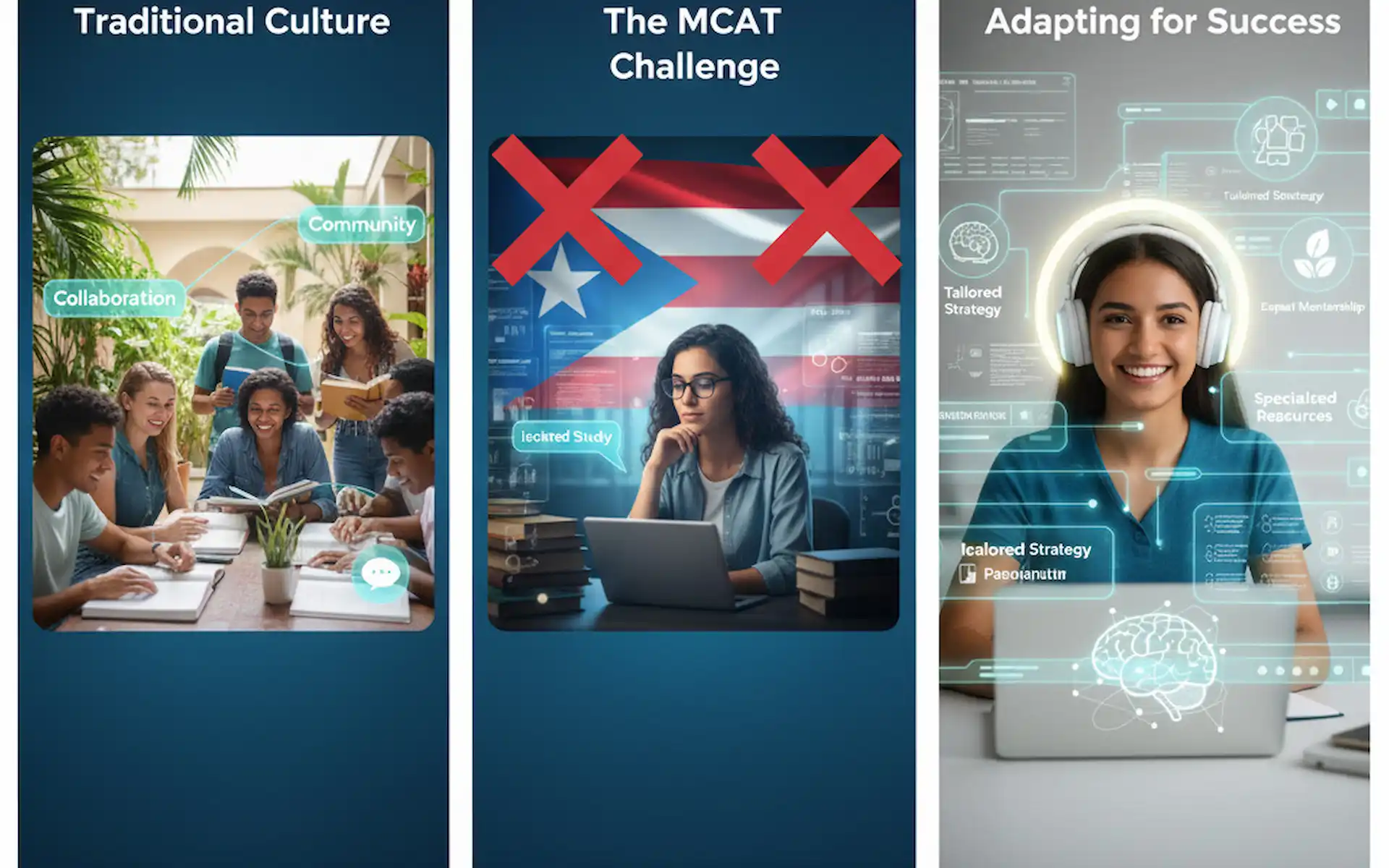
Education in Puerto Rico often emphasizes community, collaboration, and oral discussion. The pre-med culture might be less intense or structured than in the mainland U.S. While this fosters a wonderful supportive environment, the MCAT is an inherently individual and solitary challenge. The expectation is often that you will study for hours alone, developing a deeply personal understanding of the material.
This cultural difference can lead to a lack of access to specialized MCAT resources, prep courses, or advisors who are intimately familiar with the exam’s nuances. Recognizing that the MCAT requires a specific, often isolated, approach is crucial. It doesn’t mean abandoning your cultural values; it means adapting your study methods to meet the exam’s demands.
The Role of Language in MCAT Preparation
Language is more than just vocabulary. For bilingual students, processing complex scientific and rhetorical information in a second language requires more cognitive energy. You might understand a biochemistry passage, but it takes you slightly longer to parse the sentence structure and meaning than it would in Spanish. This micro-delay, multiplied over hundreds of questions, can eat into your valuable time.
Furthermore, scientific terminology often has Latin roots, which can be an advantage for Spanish speakers. However, the exact definition in an English-language context might have a subtle difference. Precision is key. Embracing your bilingualism as a strength while acknowledging the extra effort required is a balanced and effective approach.
Strategies to Overcome These Common Errors
Now that we’ve identified the problems, let’s talk about solutions.
- For CARS: Practice every single day. Read diverse, challenging English material—The Economist, The New York Times, scientific American, and philosophy journals. Don’t just read for content; read for argument. Ask yourself: “What is the author’s main point? What is their tone? What evidence are they using?”
- For Passive Learning: Shift to active recall. Use flashcards (digital ones like Anki are excellent), explain concepts out loud to yourself or a friend, and draw diagrams from memory. Force your brain to retrieve information.
- For Practice Tests: Schedule a full-length, timed practice exam every 3-4 weeks throughout your preparation. Treat it like the real thing: wake up early, follow the break schedule, and use the digital interface. This is non-negotiable.
- For Review: Create an “Error Log.” For every practice question you get wrong or guess on, document the question, the correct answer, your original answer, and a detailed analysis of why you made the mistake. Review this log weekly.
- For the Digital Format: Use the official AAMC online practice materials exclusively for your final stages of prep. Get used to the digital tools. Practice doing all your question banks on a computer.
Building a Support System for Success
You don’t have to do this alone. While the study itself is individual, your environment doesn’t have to be.
- Find a Study Group: Connect with other pre-med students in Puerto Rico. Even virtual meetings can provide accountability, motivation, and a chance to teach each other concepts (a fantastic active learning technique).
- Talk to Mentors: Seek out doctors or medical students in Puerto Rico who have taken the MCAT. Their advice and encouragement are invaluable.
- Communicate with Family: Help your family understand the immense time commitment required. Their support in managing responsibilities and providing encouragement is crucial for managing stress.
- Consider a Prep Course: If it’s within your means, a prep course can provide structure, resources, and strategies specifically designed for the MCAT’s challenges.