Decoding the USMLE Step 1 Pass/Fail Change: What It Means for Medical Students in Puerto Rico

USMLE Step 1 Pass/Fail: Implications for Medical Students in Puerto Rico The USMLE Step 1, once the most critical numerical score on a medical student’s residency application, has transitioned to a pass/fail format. This monumental change, effective as of January 26, 2022, has fundamentally altered the landscape of medical education and residency applications. For medical students in Puerto Rico, understanding the implications of this shift is not just academic; it’s a strategic necessity. This guide will decode what the change means for your path to residency, from adapting your study strategies to highlighting other crucial aspects of your application. The End of an Era: Why Step 1 Went Pass/Fail For years, the Step 1 three-digit score was the primary metric used by residency program directors to screen thousands of applicants. A high score could open doors to competitive specialties, while a low score could close them. This created a culture of intense stress, burnout, and “cramming” for the exam, often at the expense of a student’s holistic education and well-being. The National Board of Medical Examiners (NBME) and the Federation of State Medical Boards (FSMB) made the change to: The Strategic Shift: The New Importance of Step 2 CK With Step 1 now a binary pass/fail result, the spotlight has decisively moved to the USMLE Step 2 CK. This exam, which assesses a student’s ability to apply medical knowledge to clinical scenarios, has become the new primary objective metric for residency programs. For medical students in Puerto Rico, this means: The USMLE Step 1 Pass/Fail and Residency Applications for Puerto Rican Students While the pass/fail change was intended to level the playing field, it has created new challenges and opportunities, particularly for students from institutions that may be less familiar to mainland U.S. residency program directors. What Program Directors Look for Now Without the Step 1 score to filter applicants, residency programs are increasingly relying on a holistic review process. This means your application is no longer just about exam scores. Other factors have gained significant importance: The Puerto Rico Advantage For USMLE Step 1 pass fail Puerto Rico students, the holistic review shift can be an opportunity. You possess a unique set of skills and experiences that can be highlighted on your application: How to Adapt Your Strategy for Success To thrive in this new landscape, medical students in Puerto Rico should adopt a proactive and multi-faceted strategy. Focus on the Four Pillars of Success Think of your application as a house built on four strong pillars, not just a single exam score. Leverage Mentorship for Step 2 CK With the numerical pressure now on Step 2 CK, personalized mentorship becomes even more valuable. An experienced USMLE guidance mentor can: The change in USMLE Step 1 scoring is a paradigm shift. While it removes some of the anxiety associated with a single high-stakes score, it places greater emphasis on other aspects of your application. For medical students in Puerto Rico, this is an opportunity to stand out not just with your grades, but with your clinical skills, research, and unique cultural background. By adapting your strategy and focusing on a holistic approach, you can successfully navigate this new landscape and secure a spot in the residency program of your dreams.
USMLE Step 1 Pass/Fail: New Strategies for Puerto Rico Med Students | MTP

What Does “Pass” Really Mean Now? The Safe Pass Strategy The shift to Pass/Fail was intended to alleviate the immense stress on medical students and foster a more holistic residency application process.3 However, this has created a new kind of pressure. While a numerical score is no longer reported, a fail is a major red flag that can severely harm your chances of matching into a residency program. A single failed attempt is considered by most program directors as a disqualifying factor. Therefore, your new goal for Step 1 is to achieve a safe, comprehensive pass. This isn’t about just scraping by. A true “safe pass” means having a strong enough knowledge base to comfortably clear the passing threshold and, more importantly, to build a solid foundation for the more clinically focused shelf exams and USMLE Step 2 CK. Think of your Step 1 knowledge as the foundation of a building. You wouldn’t want a flimsy foundation, even if it “passes” a basic inspection. Your goal is to construct a sturdy base that can support the next “floor” of your education, which is Step 2 CK. The Increased Importance of USMLE Step 2 CK With the disappearance of the Step 1 score, the USMLE Step 2 Clinical Knowledge (CK) exam has become the most crucial objective metric for residency program directors.4 It is the only remaining standardized, three-digit score that directly measures your ability to apply medical knowledge in a clinical setting. Program directors now rely heavily on the Step 2 CK score to screen and compare applicants.5 A high score on this exam demonstrates that you have a strong grasp of clinical sciences and can effectively apply your knowledge to diagnose and manage patient care. The pressure that was once placed on Step 1 has largely been redirected to Step 2 CK.6 For students in Puerto Rico, this is a clear signal to pivot your study focus early in your clinical years to ensure a standout Step 2 CK score . Strategic Study Planning for Step 1 in the P/F Era With Step 1 becoming Pass/Fail, you must optimize your study time.7 The old strategy of spending months of dedicated study to eke out a few more points is no longer the most efficient use of your time. Instead, your energy should be reallocated to other critical application components that now hold greater weight.8 Leveraging MTP’s Medical Research Training The shift to Pass/Fail has created a greater need for students to build a compelling narrative beyond test scores. Research is a powerful way to do this. MTP’s Medical Research Training is designed to give you a significant advantage by teaching you more than just how to find a project. We help you develop the analytical and scientific writing skills that are highly valued by residency programs. Our training focuses on critical thinking, data analysis, and scholarly communication, which are skills that will serve you throughout your career. You will learn how to write a compelling abstract, present a poster, and contribute meaningfully to a scientific paper. This experience not only bolsters your residency portfolio but also prepares you for a future in medicine where research and lifelong learning are paramount. The Role of Mentorship in Navigating the Change The transition to Pass/Fail has created confusion and anxiety.13 A medical student in Puerto Rico balancing their curriculum with a new set of priorities can feel lost. This is where personalized mentorship becomes invaluable. MTP’s 1-on-1 tutoring offers a tailored approach that can guide you through this new landscape. A mentor can help you: Advice for Puerto Rico Medical Students For medical students in Puerto Rico aiming for competitive residency programs on the mainland, the Step 1 change is both a challenge and an opportunity. Here is some key advice to position yourself competitively:
Financial Planning for Medical School: A Guide for Puerto Rican Students

A Guide for Puerto Rican Students The dream of becoming a doctor is a calling driven by a desire to heal and serve. However, for pre-med students in Puerto Rico, the financial reality of a medical education can feel like a daunting barrier. With the cost of attendance at many medical schools exceeding $300,000, understanding how to navigate the financial landscape is not just a practical necessity—it is a critical component of your pre-medical journey. The prospect of massive debt can be overwhelming, but it should not deter you. With careful planning, strategic decision-making, and a thorough understanding of the resources available, you can finance your medical education and manage your debt responsibly. This guide is designed specifically for Puerto Rican students to demystify the financial process. We will break down the true costs, explore all available aid options, and provide practical strategies for budgeting and loan repayment, empowering you to focus on your studies rather than your finances. Understanding the True Cost of Medical Education The first step in financial planning is understanding the full investment. The “sticker price” of tuition is only the beginning. You must budget for the total Cost of Attendance (COA), which schools calculate annually and includes: Financial Aid Options for Puerto Rican Students Financial aid typically comes in two forms: gift aid (which you don’t repay) and loans (which you do). The goal is to maximize gift aid. Navigating FAFSA and Federal Loan Programs The Free Application for Federal Student Aid (FAFSA) is your gateway to all federal financial aid and most institutional aid. Completing it is non-negotiable. Scholarship Opportunities for Medical Students Scholarships are the best way to reduce debt. Pursue them aggressively. Budgeting Strategies During Medical School Living like a student now will allow you to live like a doctor later without being crushed by debt. Managing Debt and Loan Repayment Plans You will not have to repay your loans while in school, but you must understand your future options. Financial Considerations for Returning to Puerto Rico If you plan to return to practice in Puerto Rico, your financial picture has unique aspects. Seeking Financial Advice and Support Services Do not navigate this alone. Seek out expert help. Balancing Financial Pressures with Academic Demands The stress of finances can impact your academic performance. It is essential to manage this anxiety. Financial planning for medical school is a marathon, not a sprint. For the Puerto Rican student, it requires careful research and proactive management. By understanding the costs, maximizing scholarships, borrowing wisely, and planning for repayment, you can invest confidently in your future. This strategic approach allows you to focus on your ultimate goal: becoming a skilled and compassionate physician for your community, unburdened by preventable financial stress.
The Importance of Clinical Experience for Medical School Applications from Puerto Rico
The Importance of Clinical Experience for Medical School For aspiring medical students in Puerto Rico, a strong academic record and a competitive MCAT score are essential pillars of your application. However, they are only part of the equation. Admissions committees in the mainland U.S. and on the island are looking for more than just scholars; they are looking for future physicians who understand the reality of a career in medicine. This is where clinical experience becomes not just a box to check, but a fundamental component of a compelling application. Engaging directly with patient care and the healthcare system demonstrates your commitment, exposes you to the realities of the medical field, and provides you with invaluable stories and insights that will shape your personal statement and interviews. For students from Puerto Rico, these experiences also offer a unique opportunity to highlight your understanding of the island’s specific healthcare landscape. This guide will explore why clinical experience is so critical, what opportunities are available to you in Puerto Rico, and how to effectively weave these experiences into your narrative. Why Clinical Experience Matters to Admissions Committees Admissions committees use clinical experience as a key metric to gauge your suitability for a career in medicine. They are investing in your training and want to be confident that you have a realistic understanding of the profession’s demands and rewards. Through these experiences, you prove that you are not just attracted to the idea of being a doctor, but to the actual work of caring for patients. It shows you have tested your commitment. It’s one thing to say you want to help people; it’s another to spend your Saturdays volunteering in a clinic. This demonstrates follow-through and dedication. It provides context for your studies. Biochemistry becomes more meaningful when you’ve seen how a drug affected a patient. Anatomy becomes crucial when you understand its role in surgery. It develops essential soft skills. You learn to communicate with patients from all walks of life, work as part of a healthcare team, and navigate high-stress environments. It gives you authentic stories. The experiences you gather will form the backbone of your personal statement and provide compelling answers during interviews. Types of Clinical Experiences Available in Puerto Rico Puerto Rico offers a rich and diverse healthcare environment in which to gain experience. The key is to seek out roles that bring you into direct contact with patients. Clinical Shadowing: This involves following a physician throughout their workday. It is a passive but invaluable experience that allows you to observe the daily routines, challenges, and decision-making processes of a doctor. You can see different specialties and get a sense of where your own interests might lie. Medical Volunteering: This is an active role where you contribute your time to a healthcare setting. This is often where you get the most direct patient interaction. Common places include hospital wards, emergency rooms, free clinics, and nursing homes. Your tasks might include transporting patients, assisting with paperwork, providing comfort, and supporting clinical staff. Employment in a Clinical Setting: Some students work as medical scribes, EMTs, phlebotomists, or medical assistants. These roles require more training but provide a deep, immersive experience and a much more sophisticated understanding of patient care and medical documentation. Finding Shadowing Opportunities with Local Physicians Finding a physician to shadow can be one of the biggest challenges, but it is far from impossible. Leverage Personal and University Networks: This is your most powerful tool. Start by asking your family doctor, specialists you or your family have seen, and your university’s pre-health advisor. Professors in your science departments may also have connections to physicians they can refer you to. Contact Hospitals Directly: Larger hospitals like Centro Médico, Ashford Presbyterian, or Auxilio Mutuo may have formal observership or volunteer programs. Contact their volunteer services department to inquire about opportunities. Be Professional and Persistent: When you contact a physician, be polite, professional, and clear about your goals. Send a concise email explaining who you are, that you are a pre-med student, and why you are interested in their specific specialty. Always follow up if you don’t hear back. Volunteer Opportunities in Puerto Rican Healthcare Settings Volunteering is often the most accessible way to get started. Public Hospitals and Clinics: The Puerto Rico Department of Health and larger public hospitals often welcome volunteers. The process might be more formalized and require an application, background check, and health screenings. Private Clinics and Non-Profit Organizations: Many private clinics and non-profits, especially those serving underserved communities, are grateful for volunteer help. Organizations like Americorps or local free clinics often have structured programs. Community Health Fairs and Outreach Programs: Keep an eye out for health screenings and community outreach events. These are excellent opportunities to get a high volume of experience in a short time and to see community medicine in action. Documenting and Reflecting on Your Experiences Do not make the mistake of having an experience and forgetting to document it. Start a journal or a digital document from day one. What to Record: Write down the date, hours, and location. Describe what you did and saw. Most importantly, reflect on what you learned. How did it make you feel? What surprised you? What confirmed your desire to be a doctor? Did you witness a specific interaction that taught you about empathy, communication, or resilience? Why It Matters: This journal will be a goldmine when it comes time to write your application. It will provide specific, vivid anecdotes that bring your experiences to life, far beyond simply listing your hours on the application form. Connecting Clinical Experience to Your Personal Statement Your personal statement should tell a story of your journey to medicine. Your clinical experiences are the evidence that supports that story. Instead of saying “I am compassionate,” describe a specific moment from your volunteer work that demonstrates that compassion. Instead of saying “I want to help people,” explain how watching a doctor deliver a difficult diagnosis with empathy showed you what
How to Balance MCAT Prep with University Studies in Puerto Rico | A Guide

How to Balance MCAT Preparation with University Studies in Puerto Rico For pre-med students in Puerto Rico, the dream of becoming a doctor is a powerful motivator. However, the path is paved with significant challenges, not the least of which is the daunting task of preparing for the Medical College Admission Test (MCAT) while simultaneously excelling in demanding university courses. Juggling lecture notes, lab reports, and MCAT practice tests can feel like an impossible balancing act, often leading to stress, burnout, and the fear that one responsibility will overshadow the other. This challenge is particularly acute for students on the island, where the academic environment and resources may differ from those on the mainland. The key to success isn’t just working harder; it’s working smarter. It requires a strategic approach to time management, energy conservation, and leveraging the unique resources available to you. This guide is designed to provide you with a practical roadmap to navigate this hectic period successfully. You will learn how to create a sustainable schedule, integrate your prep into your academic life, and maintain your well-being throughout the process. Understanding the Time Commitment for Both Endeavors The first step to achieving balance is to have a clear, realistic understanding of the demands on your time. Underestimating either commitment is a recipe for overwhelm. A full course load at a university in Puerto Rico typically requires 30-40 hours per week between attending classes, labs, studying, and completing assignments. The MCAT, on the other hand, is a beast of its own. A comprehensive preparation plan generally requires 300-500 hours of study over several months. This breaks down to 15-20 hours per week if you prepare over a 6-month period. Accepting that this will be a time of intense focus is crucial. It means temporarily scaling back on non-essential activities and communicating your goals to friends and family so they can understand your limited availability. Creating an Integrated Schedule That Works Trying to “find” time for MCAT studying is a futile effort; you must intentionally “create” it. The most effective method is to integrate your MCAT prep directly into your weekly university schedule. Prioritizing Tasks and Managing Energy Levels Not all study time is created equal. You will be more effective if you work with your natural energy levels, not against them. Leveraging University Resources for MCAT Prep Your university in Puerto Rico is a treasure trove of resources—many of which you may not be fully utilizing. Strategies for Efficient Studying During Semester When time is limited, efficiency is everything. Passive reading is your enemy. Making the Most of Breaks and Holidays University breaks, such as the summer vacation or winter inter-semester, are golden opportunities for intense MCAT preparation. Dealing with Stress and Academic Pressure This balancing act will be stressful. Ignoring that stress will only make it worse. Seeking Support from Professors and Peers You do not have to do this alone. Building a support system is a sign of strength, not weakness. Maintaining Social and Family Connections Completely isolating yourself is a fast track to burnout. Your relationships are crucial for your emotional well-being. Balancing the MCAT with university studies is one of the greatest challenges a pre-med student in Puerto Rico will face. However, with meticulous planning, efficient study strategies, and a strong support system, it is entirely achievable. Remember, this is a marathon, not a sprint. By embracing a strategic and balanced approach, you can excel in your courses, achieve a competitive MCAT score, and take a confident step toward your dream of becoming a physician.
Top 5 Resources for USMLE Preparation in Puerto Rico
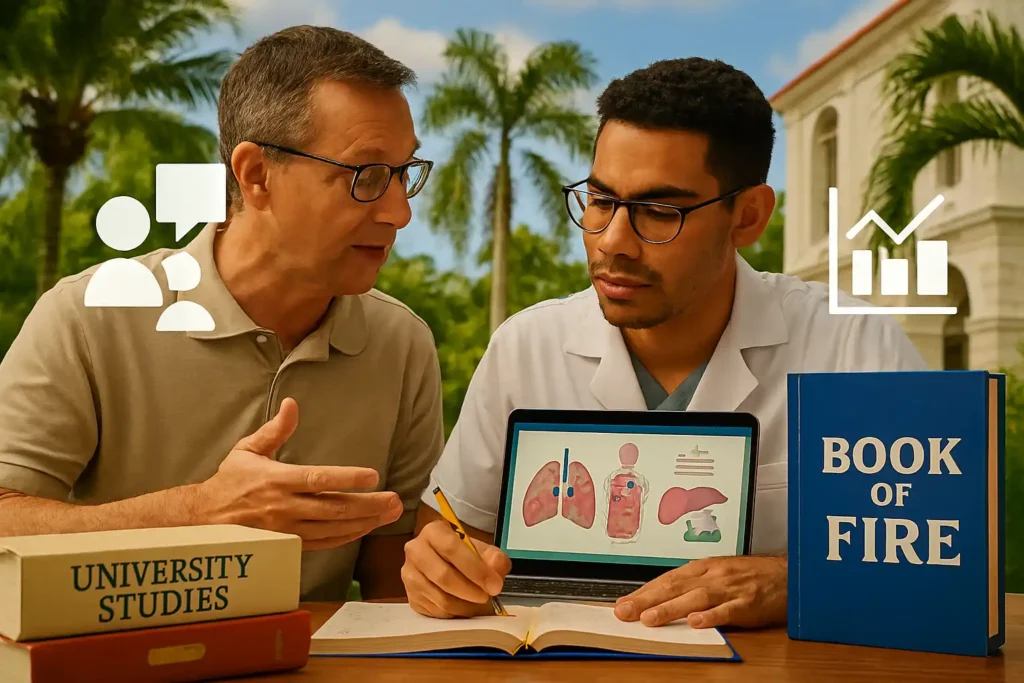
Top 5 Resources for USMLE Preparation in Puerto Rico: A Strategic Guide for Medical Students For medical students in Puerto Rico, the journey to licensure in the United States is paved with the formidable challenge of the United States Medical Licensing Examination (USMLE). This series of exams—particularly the critical Step 1 and Step 2 CK—represents a significant hurdle, one that requires not just immense knowledge but also strategic preparation. The unique academic environment, the bilingual context, and the specific strengths of the island’s medical education system demand resources that are more than just generic; they must be precisely tailored. At Modern Test Prep, founded by Dr. Andrés Eugenio Sánchez Pérez, we understand these nuances intimately. We have curated and developed a suite of the most effective tools and strategies not just for any medical student, but specifically for the Puerto Rican medical student. Here are the top 5 resources that can make the difference between passing and excelling. 1. Personalized 1-on-1 Mentorship with Island-Specific Insight The single most impactful resource any student can have is a guide who has navigated the path before them. While comprehensive books and question banks are essential, they lack the ability to provide personalized feedback, strategic direction, and moral support. This is where our personalized 1-on-1 tutoring stands apart. 2. A Comprehensive, High-Yield Video Library Designed for Retention Passive reading is one of the least effective ways to retain the vast amount of information required for the USMLE. Our second top resource is our extensive video library, which is specifically engineered to transform complex concepts into memorable, digestible lessons. 3. The “Book of Fire”: Mastering Integrated Science and Critical Analysis The modern USMLE, especially Step 1, has evolved from a test of pure fact recall to an assessment of applied knowledge and critical reasoning. It demands the ability to integrate concepts from different disciplines to solve complex problems. Our proprietary resource, the “Book of Fire,” is specifically designed to train this exact skill set. 4. Advanced Training in Data Interpretation and Experimental Design A significant portion of the USMLE is dedicated to assessing a student’s ability to be a critical consumer of medical science. This includes interpreting graphs, biostatistics data, and research study abstracts—areas that can be particularly challenging. 5. A Robust, Progress-Tracking Platform with Customized Practice Exams The final indispensable resource is a system that provides clear, data-driven feedback on your readiness. Our online platform offers more than just access to materials; it offers a dashboard for your entire USMLE journey.