How to Balance MCAT Preparation with University Studies in Puerto Rico
For pre-med students in Puerto Rico, the dream of becoming a doctor is a powerful motivator. However, the path is paved with significant challenges, not the least of which is the daunting task of preparing for the Medical College Admission Test (MCAT) while simultaneously excelling in demanding university courses. Juggling lecture notes, lab reports, and MCAT practice tests can feel like an impossible balancing act, often leading to stress, burnout, and the fear that one responsibility will overshadow the other.
This challenge is particularly acute for students on the island, where the academic environment and resources may differ from those on the mainland. The key to success isn’t just working harder; it’s working smarter. It requires a strategic approach to time management, energy conservation, and leveraging the unique resources available to you. This guide is designed to provide you with a practical roadmap to navigate this hectic period successfully. You will learn how to create a sustainable schedule, integrate your prep into your academic life, and maintain your well-being throughout the process.
Understanding the Time Commitment for Both Endeavors

The first step to achieving balance is to have a clear, realistic understanding of the demands on your time. Underestimating either commitment is a recipe for overwhelm.
A full course load at a university in Puerto Rico typically requires 30-40 hours per week between attending classes, labs, studying, and completing assignments. The MCAT, on the other hand, is a beast of its own. A comprehensive preparation plan generally requires 300-500 hours of study over several months. This breaks down to 15-20 hours per week if you prepare over a 6-month period.
Accepting that this will be a time of intense focus is crucial. It means temporarily scaling back on non-essential activities and communicating your goals to friends and family so they can understand your limited availability.
Creating an Integrated Schedule That Works
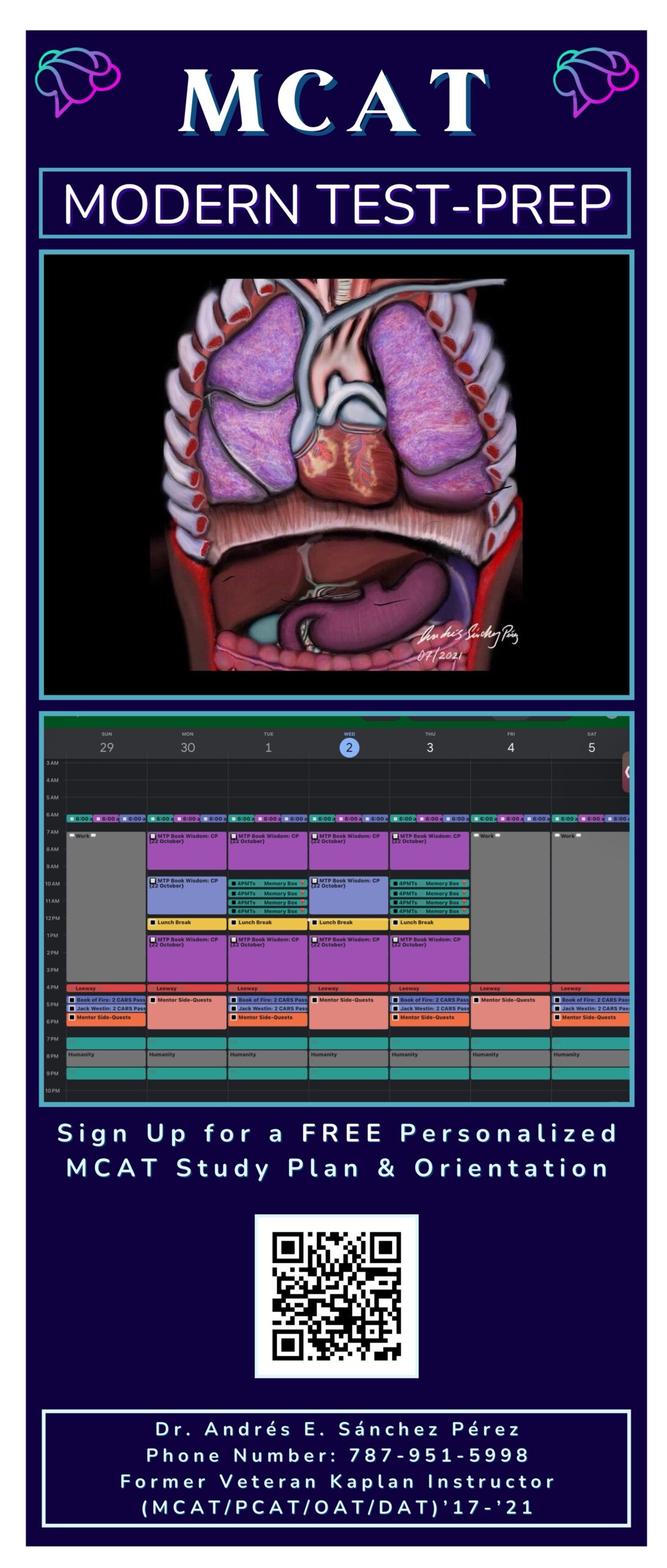
Trying to “find” time for MCAT studying is a futile effort; you must intentionally “create” it. The most effective method is to integrate your MCAT prep directly into your weekly university schedule.
- Time Blocking: Use a digital calendar or a physical planner. Block out all your fixed commitments: classes, labs, work shifts, and regular meetings.
- Treat MCAT Study like a Class: Schedule fixed, non-negotiable blocks for MCAT studying. For example, block 7-9 PM on weekdays and larger 3-4 hour chunks on weekends. Putting it in your calendar makes it a formal appointment you are less likely to skip.
- Synergize Your Studying: Look for overlaps between your current courses and the MCAT content. If you’re taking Biochemistry, your studying for that class is directly contributing to your MCAT prep. Use that to your advantage and review those topics with an MCAT-focused lens.
Prioritizing Tasks and Managing Energy Levels
Not all study time is created equal. You will be more effective if you work with your natural energy levels, not against them.
- Tackle High-Effort Tasks First: Are you a morning person? Schedule your most challenging MCAT practice (e.g., full-length exams or difficult topic reviews) in the morning before class. If you have more energy in the evening, do your university reading then and save MCAT for later.
- Use the Eisenhower Matrix: Learn to categorize tasks by urgency and importance. An upcoming midterm is both urgent and important. Reading a chapter for a class that doesn’t have a quiz for two weeks is important but not urgent. MCAT studying is always important, but its urgency increases as your test date approaches.
- Listen to Your Body: Forcing yourself to study when you are completely exhausted is inefficient. A 20-minute power nap or a short walk can sometimes do more for your productivity than an hour of unfocused staring at a book.
Leveraging University Resources for MCAT Prep
Your university in Puerto Rico is a treasure trove of resources—many of which you may not be fully utilizing.
- Pre-Health Advisor: Schedule a meeting. They can provide guidance on timeline planning, resource recommendations, and often have information on scholarship opportunities for prep courses.
- Library Resources: University libraries often provide access to online learning platforms, quiet study rooms, and even copies of popular MCAT prep books that you can borrow, saving you significant money.
- Science Professors: Don’t be afraid to ask for help. Your biology or chemistry professor can often clarify a complex concept that appears both in their class and on the MCAT. They can also be valuable sources for letters of recommendation later.
Strategies for Efficient Studying During Semester
When time is limited, efficiency is everything. Passive reading is your enemy.
- Active Recall is Key: Instead of re-reading notes, close the book and test yourself. Use flashcards (digital apps like Anki are excellent), explain concepts out loud, or do practice problems. This forces your brain to retrieve information, making it stick much better.
- The Pomodoro Technique: Break your study time into 25-minute focused intervals followed by a 5-minute break. This prevents mental fatigue and helps maintain a high level of concentration during each block.
- Focus on Weaknesses: Use practice tests to identify your low-yield topics. Don’t waste time repeatedly reviewing topics you already know well. Dedicate your precious study hours to turning weaknesses into strengths.
Making the Most of Breaks and Holidays
University breaks, such as the summer vacation or winter inter-semester, are golden opportunities for intense MCAT preparation.
- Plan a “Study Bootcamp”: If you plan to test in the spring, use the winter break to dedicate 4-6 hours daily to MCAT prep. This can help you build significant momentum before the new semester begins.
- Set Realistic Goals for Breaks: While you should dedicate more time, don’t plan to study 12 hours a day. It’s unsustainable. Aim for a balanced schedule that includes rest and relaxation to avoid burnout before the semester even restarts.
Dealing with Stress and Academic Pressure
This balancing act will be stressful. Ignoring that stress will only make it worse.
- Schedule Downtime: It might seem counterintuitive, but you must schedule time to do nothing. Whether it’s watching a show, listening to music, or going to the beach, deliberate rest is a productive part of your schedule, not a deviation from it.
- Mindfulness and Exercise: Even 10 minutes of meditation or a 30-minute workout can drastically reduce stress levels and improve focus. Physical activity is especially effective at clearing your mind.
- Keep the End Goal in Sight: On tough days, remind yourself why you are doing this. Visualize yourself wearing a white coat and succeeding in medical school. Reconnecting with your purpose can renew your motivation.
Seeking Support from Professors and Peers
You do not have to do this alone. Building a support system is a sign of strength, not weakness.
- Form a Study Group: Connect with other pre-med students at your university who are also preparing for the MCAT. You can share resources, quiz each other, and provide moral support. Knowing others are going through the same struggle is incredibly validating.
- Communicate with Professors: If you have a big MCAT practice test scheduled, be proactive. Let your professor know in advance if you might need an extension on a minor assignment. Most educators are supportive of students pursuing such goals if they are approached with respect and honesty beforehand.
Maintaining Social and Family Connections
Completely isolating yourself is a fast track to burnout. Your relationships are crucial for your emotional well-being.
- Quality Over Quantity: You may not have time for long outings, but you can still have a meal with your family or a short coffee with a friend. Explain to them that your time is limited but that you value their support.
- Involve Them: Help your friends and family understand what you’re going through. Sometimes, just talking about the pressure can relieve it. They can become your biggest cheerleaders.
Balancing the MCAT with university studies is one of the greatest challenges a pre-med student in Puerto Rico will face. However, with meticulous planning, efficient study strategies, and a strong support system, it is entirely achievable. Remember, this is a marathon, not a sprint. By embracing a strategic and balanced approach, you can excel in your courses, achieve a competitive MCAT score, and take a confident step toward your dream of becoming a physician.