The Challenge for Puerto Rican Pre-Meds: A Balancing Act

For pre-med students in Puerto Rico, the spring semester presents a unique and universal challenge. You are simultaneously facing a demanding course load at institutions like the University of Puerto Rico or other schools across the island, while also beginning, or continuing, preparation for the single most important exam of your career: the MCAT or DAT. The pressure to excel in both arenas—maintaining a stellar GPA and achieving a top score on the entrance exam—can feel overwhelming. Many students fall into the trap of prioritizing one at the expense of the other, a decision that can jeopardize their medical school application. This article offers a strategic framework to avoid that pitfall. The key is not to separate these two goals but to integrate them, creating a master plan that allows you to thrive at both.
The Integrated Schedule Approach: Your Master Blueprint
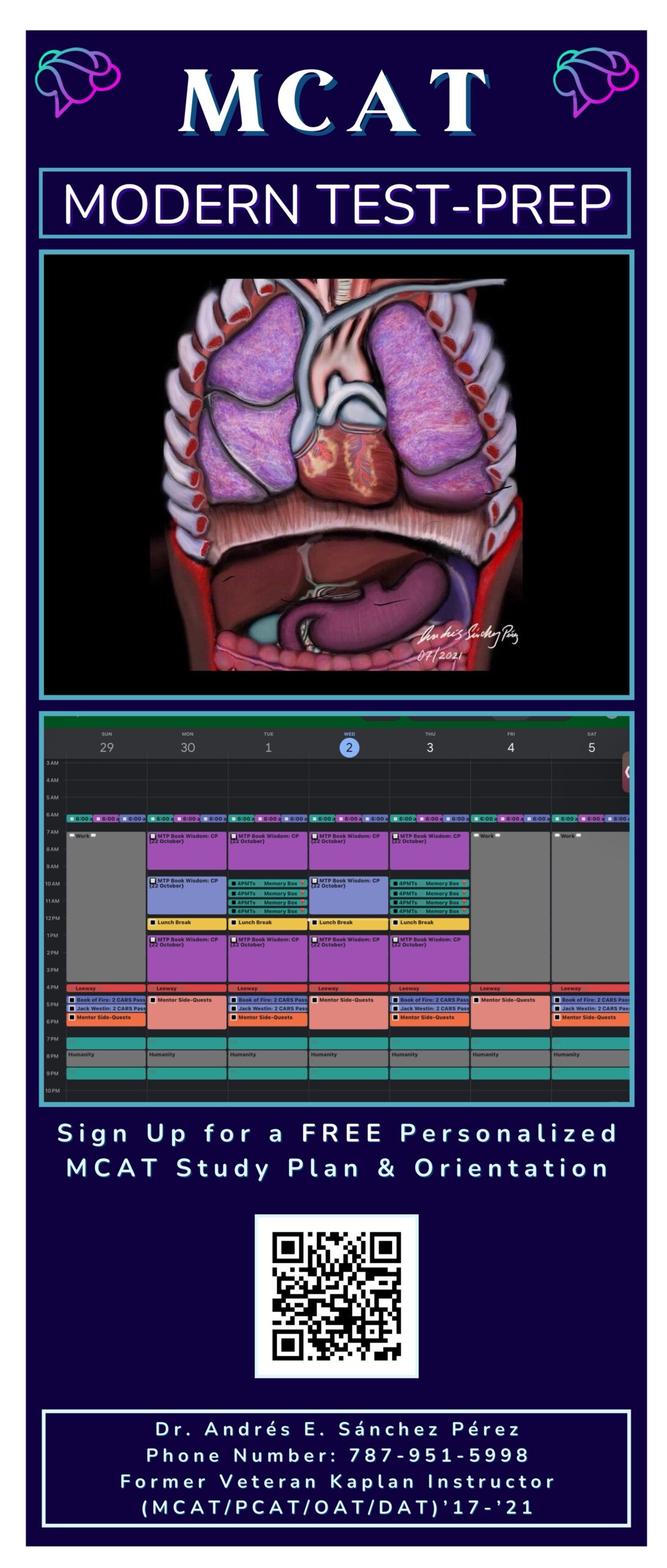
The first and most critical step is to move beyond the idea of having two separate schedules. Instead, you need one master calendar that serves as your blueprint for the entire semester. This “Integrated Schedule” is a single, visual representation of all your commitments, from your 8:00 AM organic chemistry lab to your dedicated MCAT study block. By literally blocking out time for everything, you eliminate the mental gymnastics and anxiety that come with constantly juggling competing priorities.
How to Create Your Integrated Schedule:
- Gather All Commitments: Start with a blank calendar, either digital (like Google Calendar) or physical. First, input all your fixed commitments: classes, labs, work shifts, and any mandatory club meetings.
- Allocate Classwork Time: For each class, block out dedicated time for homework, reviewing lecture notes, and preparing for quizzes or exams. A good rule of thumb is to allocate at least 2-3 hours of study time for every hour you spend in a lecture hall.
- Integrate Your MCAT Prep: Now, and this is the crucial step, block out specific, non-negotiable hours for your MCAT/DAT preparation. Don’t just write “study for MCAT” in a single large chunk on Sunday. Instead, schedule multiple, shorter sessions throughout the week. For example, you might have a “Physics Content Review” block on Monday, a “CARS Practice” session on Wednesday, and a “Full-Length Practice Exam” block on a Saturday morning.
- Schedule Your Life: It’s equally important to block out time for rest, exercise, social activities, and sleep. Skipping these will inevitably lead to burnout. Treat your “Netflix and chill” time or your gym session with the same level of importance as your chemistry lab.
By following this approach, you create a schedule that is realistic, sustainable, and transparent. It visually demonstrates that you have time for everything, as long as you use that time strategically. You’ll stop feeling guilty about taking a break because it’s already part of the plan.
Synergizing Your Studying: Killing Two Birds with One Stone
The most common mistake pre-meds make is treating their university coursework and MCAT prep as two separate, competing entities. The truth is, they are deeply interconnected. Your spring semester science classes—be they biochemistry, genetics, or physics—are not just a means to a good GPA; they are your primary source of MCAT content review. The goal is to “synergize” your studying, using techniques from one area to improve the other.
This is where MTP’s core methods, particularly active recall and spaced repetition, become powerful tools for your university classes. Instead of passively re-reading lecture notes for your in-class exams, actively test yourself.
Practical Examples of Synergy:
- For a Biochemistry course: As soon as you finish a lecture on cellular respiration, don’t just put your notes away. Immediately try to redraw the Krebs cycle from memory. Then, go to your MCAT question bank and find a handful of questions on glycolysis or the electron transport chain. By doing this, you’re not only studying for your upcoming biochem exam but also cementing that knowledge in an MCAT-specific context.
- For a Physics course: After learning about optics in class, instead of just solving textbook problems, think about how those concepts would be applied in a clinical setting. For example, how does a laser work to ablate tissue? This type of integrated thinking is the very essence of the MCAT.
- For a Psychology/Sociology course: As you encounter new terms like “social loafing” or “groupthink,” immediately create flashcards or notes that connect the term to a real-world scenario. This is a skill directly applicable to the Psych/Soc section of the MCAT, which relies heavily on understanding complex scenarios and applying foundational terms.
By actively engaging with your course material through an MCAT lens, you’re not just preparing for one test; you’re building a deeper, more lasting understanding that benefits both your GPA and your future score.
The Power of “Micro-Studying”

In the life of a busy university student, large, uninterrupted blocks of study time are a luxury. This is why you must master the art of “micro-studying.” These are short, highly focused study sessions that you can fit into the small pockets of time that would otherwise be wasted.
Think about your daily routine. Do you take the bus to class? That’s 20 minutes. Do you have a 15-minute gap between your chemistry lecture and your lab? What about the 10 minutes you spend waiting for your coffee order? These are all prime opportunities for micro-studying.
How to Make Micro-Studying Count:
- Flashcards on Your Phone: Use a flashcard app (like Anki or Quizlet) that you can access from your phone. Review a few cards while waiting in line at the university cafeteria or between classes.
- Targeted Practice: MTP’s question bank is perfect for this. Instead of a full-length practice exam, set a goal to complete just one or two short, 5-question quizzes on a specific topic you’re currently reviewing in class.
- CARS Passages: The MCAT CARS section is ideal for micro-studying. Read and analyze a single passage between classes. It keeps your mind sharp and your critical thinking skills active without requiring a large time commitment.
Consistency is key here. Ten minutes of focused study, five times a day, adds up to almost an hour of valuable, high-yield prep every day. Over the course of a semester, that’s an immense amount of time you’ve reclaimed from your schedule.
Communicating with Professors: Your Strategic Allies
Your professors are more than just educators; they can be mentors, advisors, and future letter of recommendation writers. It is crucial to build a responsible and respectful relationship with them. While you should never ask for special treatment, responsibly communicating your MCAT goals can build rapport and help you gain support.
A Responsible Approach:
- Be a Good Student First: Attend office hours early in the semester, not just when you’re struggling. Ask thoughtful questions about the course material to show your genuine interest and engagement.
- Choose the Right Moment: Once you’ve established a professional relationship, find a natural opening in a conversation.
- Frame Your Request Professionally: Instead of saying, “I’m busy with the MCAT, can you help me?” try something like, “I’m really enjoying this class, and I’ve been trying to connect the concepts to my MCAT preparation. Do you have any advice on how to best bridge the material?”
- Seek Flexibility, Not Leniency: You might be able to find out about exam schedules, grading rubrics, or optional review sessions that can help you prioritize your time. You may also get valuable advice on how to balance your obligations, and they will likely be more inclined to write a positive letter of recommendation for you in the future.
The Role of MTP’s Flexible Resources
A strategic plan requires strategic tools. MTP’s resources are specifically designed to fit into the chaotic and demanding schedule of a university student. We understand that your study time is not always a fixed 9-to-5.
- Pre-Recorded Sessions: Our library of pre-recorded lectures means you can review complex topics at any time of day or night. Stuck on a difficult concept at 11 PM? You don’t have to wait for an office hour; you can pull up a video, watch it as many times as you need, and master the concept on your own schedule.
- On-Demand Tutoring: Our 1-on-1 tutoring service is available on your terms. If you hit a wall with a practice problem, you can schedule a session with an expert who can quickly get you back on track without disrupting your entire study plan. This just-in-time support prevents you from getting bogged down and losing precious study hours.
- Adaptive Question Banks: MTP’s question banks are not just a list of questions. They are adaptive, meaning they learn your strengths and weaknesses. So, even in a short micro-study session, every question you answer is high-yield, targeting an area where you need improvement.
Recognizing and Preventing Burnout
A strategic plan is only effective if you can stick to it, and burnout is the silent killer of productivity. It’s a risk for every pre-med student, especially those balancing a heavy course load with a major exam. Recognizing the signs is the first step toward prevention.
Signs of Burnout to Watch For:
- Academic: Procrastination, dropping grades, feeling detached from your studies.
- Emotional: Irritability, anxiety, cynicism, a feeling of hopelessness.
- Physical: Chronic fatigue, changes in sleep or appetite, frequent headaches.
Strategies for Prevention:
- Mandatory Rest: Your Integrated Schedule should include at least one full day with no academic or MCAT work. This is not optional.
- Schedule Social Time: Block out time for friends, family, and social events. Spending time with loved ones is a vital way to de-stress and recharge.
- Engage in Hobbies: Re-engage with an activity you love that has nothing to do with science or medicine, whether it’s playing basketball, painting, or hiking.
- The Non-Negotiables: Adequate sleep, proper nutrition, and regular exercise are non-negotiable. Your brain and body need fuel and rest to perform at a high level.
By proactively scheduling rest and fun, you’re not just taking a break; you’re actively investing in your long-term success.