MCAT Study Schedule That Works for Puerto Rican Students
For pre-med students in Puerto Rico, the journey to medical school is a marathon of dedication, resilience, and strategic planning. The Medical College Admission Test (MCAT) stands as one of the most significant hurdles on this path. Its vast scope—covering everything from biochemistry and physics to critical analysis and psychological reasoning—requires a study plan that is not just rigorous but also intelligent and adaptable. A generic, one-size-fits-all schedule often leads to burnout, frustration, and subpar results.
The unique academic, cultural, and logistical landscape of Puerto Rico demands a tailored approach. Balancing university courses at institutions like UPR or UCC, honoring deep-rooted family and cultural responsibilities, and navigating potential infrastructure challenges like internet reliability are all factors that must be considered. This article provides a comprehensive, step-by-step guide to crafting an MCAT study schedule that is both effective and sustainable for the motivated Puerto Rican student. We’ll move beyond basic advice to provide a framework that respects your context and maximizes your potential for success.
Understanding the MCAT Timeline and Your Commitments

The first and most crucial step in building your study plan is understanding the battlefield. The MCAT is offered from January through September, but your personal timeline is about more than just test dates.
The Ideal Timeline: A comprehensive MCAT prep period typically spans 3-6 months of dedicated study. This does not include the time you are simultaneously taking full-time university courses. The key is to start early. Ideally, you should begin planning your schedule 8-10 months before your intended test date. This allows for a gradual ramp-up of intensity.
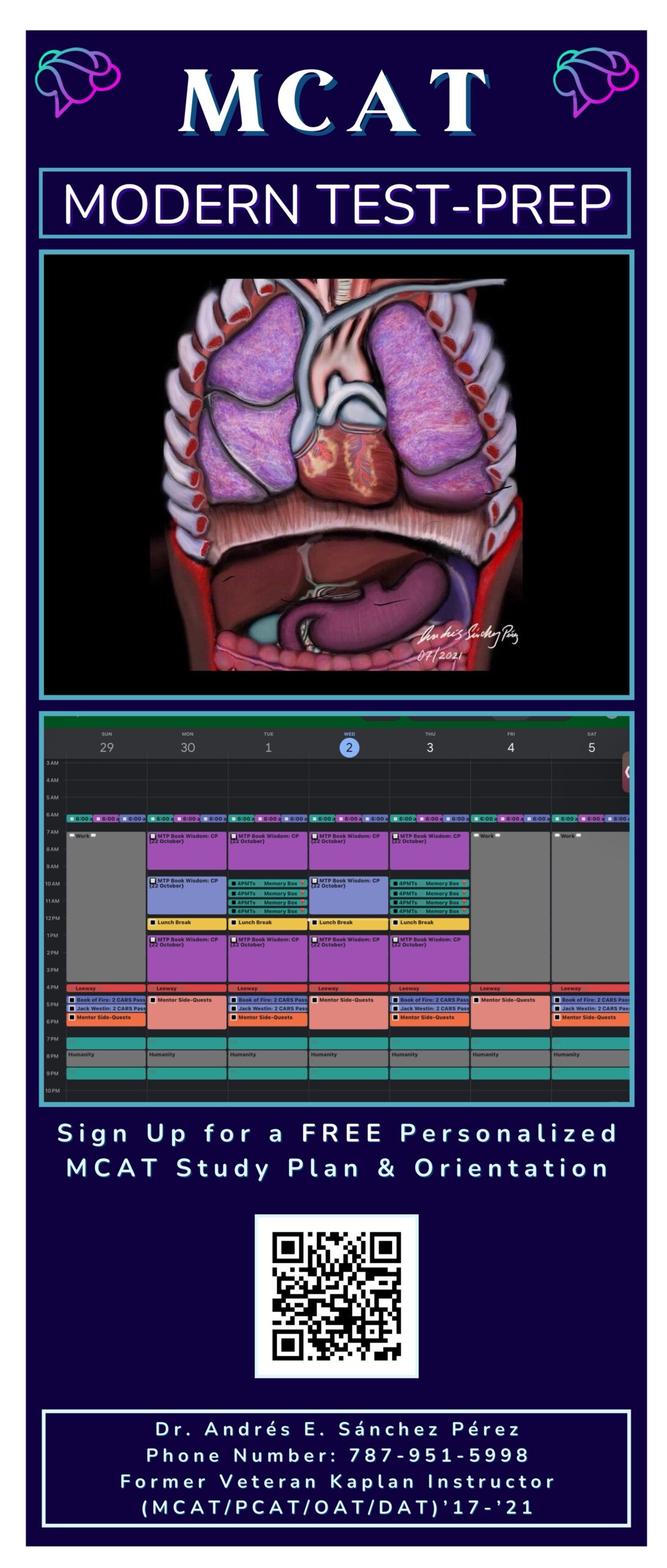
Mapping Your Commitments: Take out a calendar—a digital one like Google Calendar works best for its flexibility. Block out all your non-negotiable commitments for the entire preparation period:
- University Schedule: Mark your class times, lab sessions, midterm and final exam periods. These are your highest academic priorities.
- Major Personal Events: Include family gatherings, weddings, holidays (like Navidad and Three Kings Day, which are major family events in Puerto Rico), and any vacations.
- Extracurriculars: Note any ongoing volunteer work, research lab hours, or club responsibilities.
Seeing this visual representation of your time is often a reality check. It helps you identify your true available study hours and avoid the common pitfall of overestimating your available time.
Assessing Your Strengths and Weaknesses in MCAT Subjects
You cannot create an efficient schedule if you don’t know where to focus your energy. Before you dive in, you must conduct an honest self-assessment.
Take a Diagnostic Exam: Before you open a single review book, take a full-length, timed MCAT practice test from the Association of American Medical Colleges (AAMC) or a reputable prep company. This is your baseline. It will be humbling, but it is the most valuable data point you will get.
Analyze the Results: Don’t just look at the overall score. Break it down by section:
- Chemical and Physical Foundations of Biological Systems (Chem/Phys)
- Critical Analysis and Reasoning Skills (CARS)
- Biological and Biochemical Foundations of Living Systems (Bio/Biochem)
- Psychological, Social, and Biological Foundations of Behavior (Psych/Soc)
Identify which sections are your weakest and which are your strongest. Within those sections, note the specific topics you struggled with (e.g., thermodynamics, optics, genetics, sociology theories). Your schedule should allocate significantly more time to your weaknesses while maintaining your strengths with periodic review.
Balancing Study Time with University Courses in Puerto Rico

Juggling MCAT prep with a demanding course load at UPR, UCC, or another university is your biggest challenge. The key is integration, not separation.
Strategic Semester Planning:
- Lighten Your Load: If possible, during the semester you plan to intensively study for the MCAT, try to take a slightly lighter course load. Avoid stacking notoriously difficult classes like Organic Chemistry II, Physics II, and Biochemistry all in the same semester while prepping.
- Integrate Content: Align your MCAT studying with your current courses. If you are taking Biochemistry, schedule your MCAT biochemistry content review for that same period. This creates a powerful reinforcement loop—you study once but learn for two purposes.
Time Blocking is Your Best Friend: The concept of “I’ll study when I find time” is a recipe for failure. You must make time.
- Weekly Blocks: Dedicate specific, recurring blocks in your calendar for MCAT study. Treat these blocks with the same importance as a class lecture. No skipping.
- Daily Minimums: Even on your busiest days, commit to a minimum of 60-90 minutes of review. This could be doing 15 CARS passages, reviewing amino acid flashcards, or watching content videos on a weak topic. Consistency is far more important than occasional cramming.
Incorporating Cultural and Family Responsibilities
This is perhaps the most distinctive aspect of creating a schedule for a Puerto Rican student. Family and community ties are strong and central to life. Ignoring these responsibilities to study is not only culturally insensitive but will also lead to guilt and burnout. The solution is to plan for them.
Communicate Your Goals: Sit down with your family and explain the importance of the MCAT, your goals, and the time commitment required. Help them understand that this is a temporary period of intense focus. When they understand the “why,” they are more likely to support your need to sometimes say no or to study while everyone is socializing.
Schedule Family Time: Just as you schedule study blocks, proactively schedule quality family time. Block out Friday nights for dinner or Sunday afternoons. Being fully present during these scheduled times will alleviate guilt and make it easier to protect your study times. It also ensures you maintain the crucial social support system you’ll need during this stressful period.
Leverage Cultural Strengths: Use your environment to your advantage. The concept of “community” can be a strength. Form a study group with other pre-med students. You can hold each other accountable, quiz each other in Spanish and English to ensure true understanding, and provide mutual emotional support from people who truly get it.
Utilizing Online Resources and Flexible Learning
Modern Test Prep’s philosophy is built on the power of flexible, digital learning to overcome geographical and logistical barriers. This is especially relevant for students outside the San Juan metro area or those with irregular schedules.
On-Demand Video Libraries: Utilize resources like Modern Test Prep’s pre-recorded video classes. Their power lies in their flexibility. You can watch a 45-minute lecture on metabolic pathways at 10:00 PM after your lab ends or on a Saturday morning at your own pace, pausing and rewinding as needed.
Digital Flashcards and Question Banks: Spaced repetition software (SRS) like Anki is a game-changer. It creates a personalized review schedule based on what you’re about to forget, maximizing the efficiency of your memorization for topics like psychology terms and equations. Use it during short breaks between classes or while waiting for an appointment.
Virtual 1-on-1 Tutoring: This provides personalized guidance without the need for a long commute. You can get targeted help on your specific weaknesses, whether it’s a CARS strategy session or a deep dive into physics concepts, all from your home, saving you precious time and energy.
Adapting Your Schedule for Maximum Efficiency
Your study schedule is a living document, not carved in stone. You must regularly assess its effectiveness and be willing to adapt.
The Pareto Principle (80/20 Rule): Apply this to your studying. Identify the 20% of topics that will yield 80% of your score improvement. Often, this means focusing on high-yield topics that are frequently tested and that you can actually improve upon. Don’t waste a week perfecting a obscure topic that might have one question on the test.
Active vs. Passive Learning: Your schedule must prioritize active learning. passively reading a review book for 4 hours is far less effective than spending 2 hours actively doing practice problems and then 2 hours reviewing your mistakes. Schedule blocks for “Content Review” and separate, more important blocks for “Practice Problems” and “Full-Length Exams.”
Time-Based Goals vs. Task-Based Goals: Instead of scheduling “study biology for 2 hours,” schedule “complete and review 30 questions on the cardiovascular system.” Task-based goals are more concrete and prevent you from passively staring at a book without making progress.
Avoiding Burnout: The Importance of Rest and Self-Care
Pushing yourself to the point of exhaustion is counterproductive. Fatigue impairs memory, critical thinking, and motivation—the very skills you need to succeed.
Schedule Rest: Literally put “REST,” “Gym,” “Beach,” or “Netflix” into your calendar. Guard these blocks as fiercely as your study blocks. Your brain consolidates memory and recharges during downtime. Aim for one full day off per week with no MCAT-related activities.
Listen to Your Body: If you are consistently feeling exhausted, irritable, or unable to focus, you are overdoing it. It’s a sign to scale back, not push harder. Take an extra evening off. Your score will thank you more for 5 hours of focused, well-rested studying than 10 hours of exhausted, unproductive staring.
Maintain Healthy Habits: Do not sacrifice sleep, nutrition, or exercise for studying. These are not luxuries; they are essential components of your preparation. Regular exercise, in particular, is a proven way to reduce stress and improve cognitive function.
Evaluating and Adjusting Your Plan as Needed
A rigid plan is a fragile plan. You will encounter unexpected events: a university exam that was harder than expected and requires more catch-up time, a family emergency, or simply a topic that takes you twice as long to master as you predicted.
Conduct Weekly Reviews: Every Sunday, take 30 minutes to review your past week. Did you hit your task-based goals? What topics are still causing trouble? How are your energy levels?
- What worked? Keep doing it.
- What didn’t? Why didn’t it? Adjust it for the upcoming week.
Be Kind to Yourself: Missed a study session? Don’t throw the entire week away. Acknowledge it, understand why it happened, and adjust the rest of your week to compensate. Self-compassion is a critical tool for resilience on this long journey.